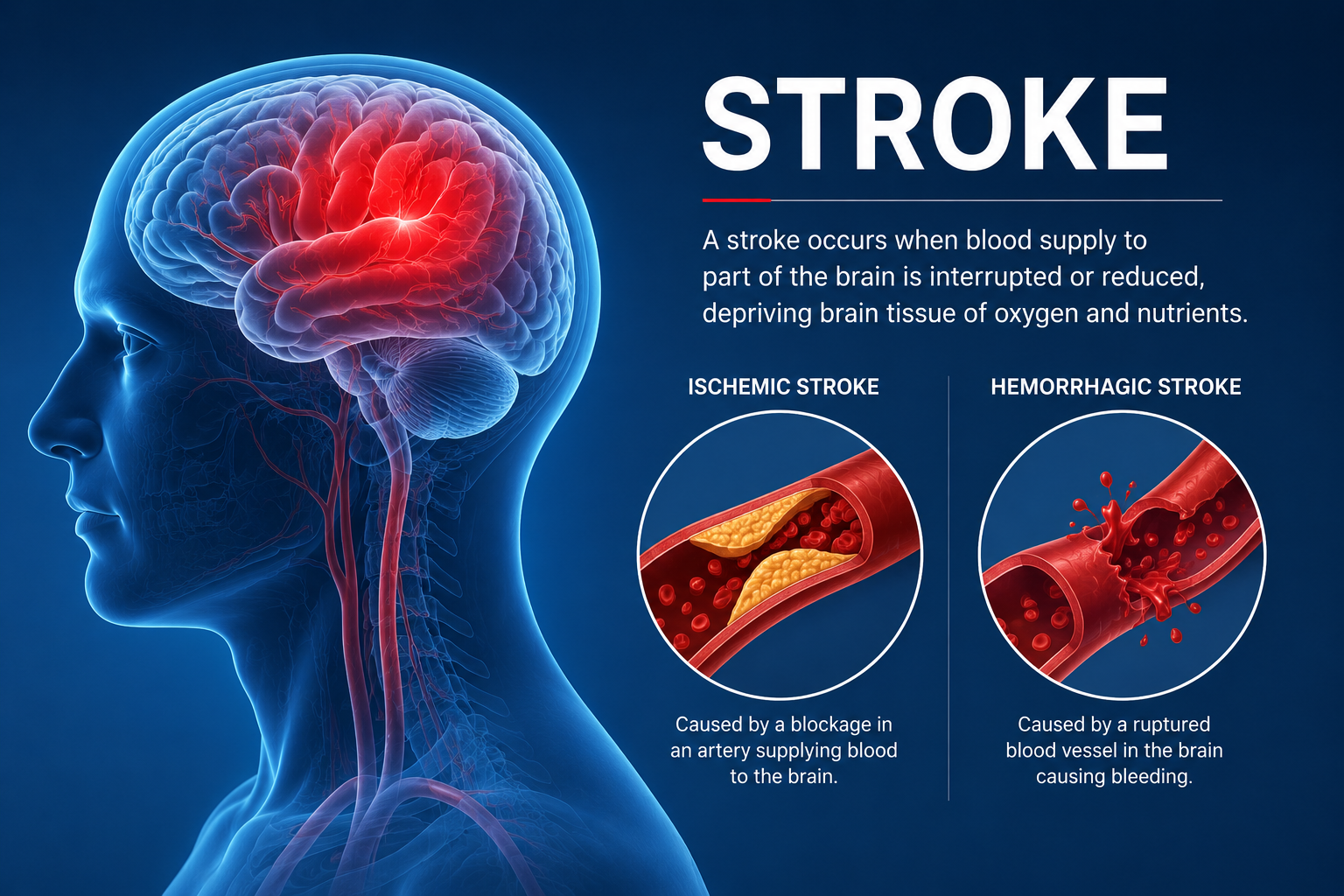
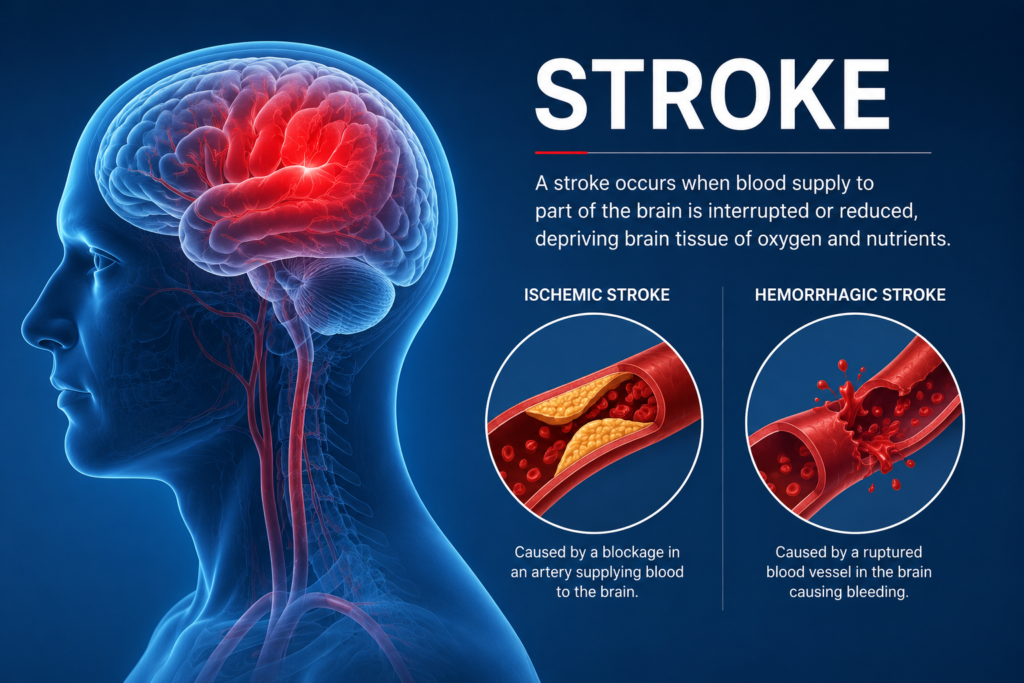
A stroke is a serious medical condition that occurs when the blood supply to part of the brain is interrupted or reduced. Without enough oxygen and nutrients, brain cells begin to die within minutes. Stroke is a medical emergency, and early treatment can save lives and reduce long-term disability.
What Is a Stroke?
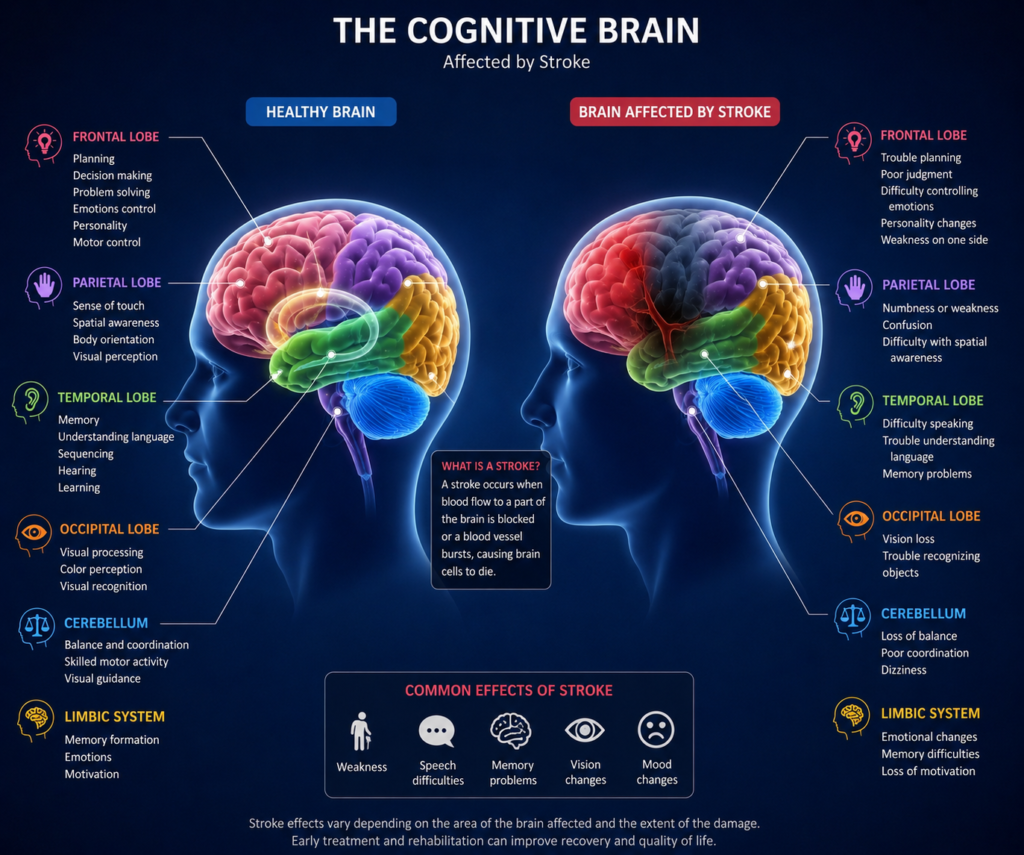
The brain controls movement, speech, memory, and many important body functions. When blood flow to the brain stops, the affected brain cells cannot function properly. This can lead to problems such as paralysis, difficulty speaking, vision loss, or memory issues.
Types of Stroke
1. Ischemic Stroke
This is the most common type of stroke. It happens when a blood clot blocks a blood vessel in the brain.
2. Hemorrhagic Stroke
This occurs when a blood vessel in the brain bursts and causes bleeding in or around the brain.
3. Transient Ischemic Attack (TIA)
Often called a “mini-stroke,” a TIA is temporary but should never be ignored because it can be a warning sign of a future stroke.
Common Symptoms
Recognizing the warning signs early can save a life. Common symptoms include:
- Sudden weakness or numbness in the face, arm, or leg
- Difficulty speaking or understanding speech
- Sudden confusion
- Loss of balance or coordination
- Severe headache with no known cause
- Trouble seeing in one or both eyes
A simple way to remember stroke symptoms is FAST:
- F – Face drooping
- A – Arm weakness
- S – Speech difficulty
- T – Time to call emergency services
Causes and Risk Factors
Several factors can increase the risk of stroke, including:
- High blood pressure
- Diabetes
- Smoking
- High cholesterol
- Obesity
- Lack of physical activity
- Excessive alcohol consumption
- Heart disease
- Stress
How to Prevent
This condition can be prevented through healthy lifestyle choices:
- Eat a balanced and nutritious diet
- Exercise regularly
- Control blood pressure and sugar levels
- Avoid smoking and alcohol
- Maintain a healthy weight
- Go for regular medical checkups
Treatment and Recovery
cognitive recovery depends on the type and severity of the stroke. Immediate medical attention is critical. Treatments may include medications, surgery, physical therapy, speech therapy, and rehabilitation programs.
Recovery varies from person to person. Some people recover fully, while others may need long-term care and support. Family encouragement and proper rehabilitation play an important role in recovery.
Golden Period of Recovery
The golden period of this recovery is the first 3 to 6 months after a stroke. This is the most important phase for rehabilitation and improvement.
During this time, the brain has a higher ability to reorganize and recover lost functions through a process called neuroplasticity. With proper therapy and care, patients can see significant improvements in movement, speech, and daily activities.
Why the Golden Period is Important
- Faster improvement in physical strength and movement
- Better recovery of speech and communication skills
- Higher chances of regaining independence
- Reduced long-term disability
What Should Be Done During This Period
- Regular physiotherapy sessions
- Speech and occupational therapy if needed
- Consistent home exercises
- Healthy diet and proper rest
- Emotional and family support
Therapy for Recovery Backbone
Therapy plays a crucial role in helping patients regain lost abilities and improve their quality of life after a stroke. Since a stroke can affect movement, speech, memory, and daily activities, different types of therapies are used based on the patient’s condition and recovery needs.
Physiotherapy
Physiotherapy helps improve muscle strength, balance, and coordination. After this condition, many patients experience weakness or paralysis on one side of the body. Physiotherapists guide patients through exercises that help them learn to walk, move their arms, and regain physical independence.
Speech Therapy
Rhythm and Music Unlock Brain Healing
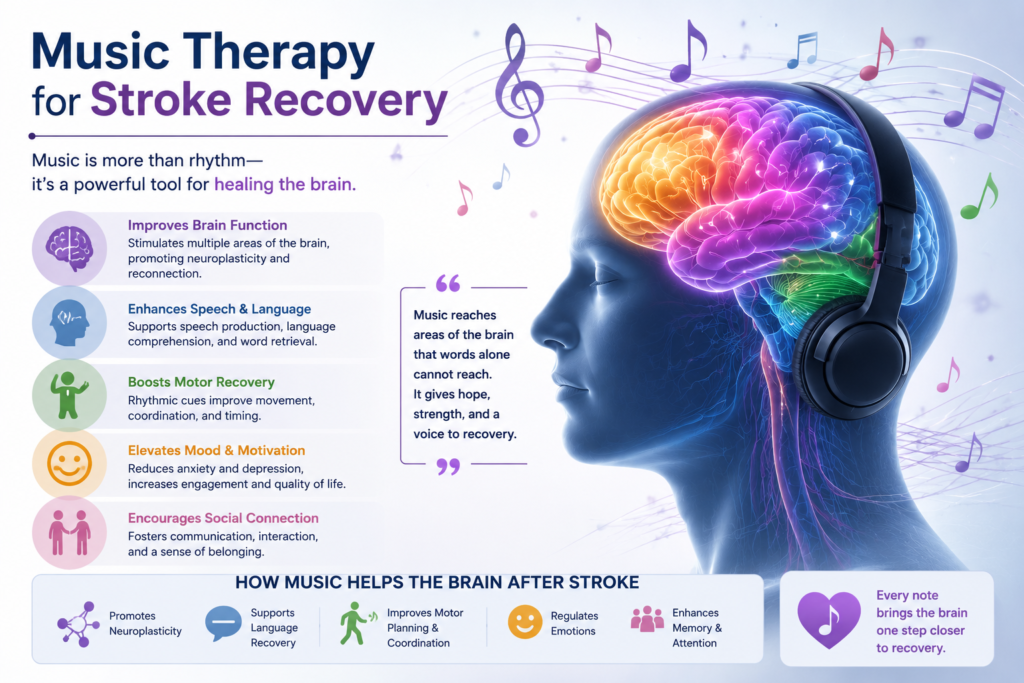
Some patients have difficulty speaking, understanding language, or swallowing. Speech therapy helps improve communication skills and rebuild confidence in speaking and expression. It also supports safe swallowing techniques. Music is one of the important for speech therapy.
Occupational Therapy
Occupational therapy focuses on helping survivors perform daily activities such as eating, dressing, bathing, and writing. It teaches practical skills and may suggest tools or techniques to make life easier and more independent.
Psychological Support
Recovery is not only physical but also emotional. Many patients experience depression, anxiety, or frustration. Counseling and psychological therapy help patients and families cope with emotional challenges and stay motivated during recovery.
Importance of Early Therapy
Starting therapy early after a significantly improves recovery outcomes. Consistent practice, family support, and regular follow-ups with healthcare professionals are essential for progress.
The therapy is a step-by-step process that helps patients rebuild their life after a major health event. With proper rehabilitation and support, many stroke survivors can regain independence and lead a better quality of life.
Conclusion
Stroke is a life-threatening condition, but awareness and early action can make a huge difference. Understanding the symptoms, causes, and preventive measures can help protect yourself and your loved ones. A healthy lifestyle and timely medical care are the best defenses against stroke.